Wednesday, 2 January 2013

The Bombing of Gulf Air Flight 771

Gulf Air Flight 771 was a regularly scheduled flight from Karachi, Pakistan to Abu Dhabi, United Arab Emirates. On 23 September 1983, while the Boeing 737-2P6 was on approach to Abu Dhabi International Airport, the airplane "suddenly lowered its altitude" abruptly and crashed 30 miles north-east of the airport, near Mina Jebel Ali in the emirate of Abu Dhabi. All 110 people on board, including 5 crew members, died.
The plane crashed near Mina Jebel Ali
 In the aftermath of the incident, an anonymous Gulf Air official stated that "the airliner crashed due to an accident in midair" and declined to elaborate. Karachi's airport control tower was said to have received a distress call from the ill-fated plane, minutes prior to its crash. [1]

What happened?

An investigation was carried out by the American National Transportation Safety Board, and they released a 400-page report on their findings, which was not immediately published in the Gulf. The report was revealed in September 1987 by British politician Sir Dudley Smith, under pressure from the parents of British stewardess Lyn Farthing who perished in the crash. Others among the crew on board included British stewardess Sally Anne of Peterborough and Bahraini steward Hashim Sayed Abdullah.

A Gulf Air Boeing 737-2P6
The report included last moments in the cockpit, including a description of Omani captain Saoud Al Kindy praying as the plane nose-dived into the desert. Also on the flight deck was Bahraini co-pilot was Khazal Al Qadi. The report mentioned that everything on board the flight was perfectly normal and voice transcripts showed the crew chatting among themselves. One asked the other if he was on duty the next day, to which he replied "No, I've got a day off tomorrow". That was followed by a sudden interruption and the recording showed the pilots making a frantic attempt to control the plane.

The report indicated a bomb in the baggage hold as the primary cause of the accident, due to the following factors:
  1. A passenger who checked in baggage at Karachi but never boarded the plane.
  2. The nature of injuries to passengers who were seated above the baggage hold.
  3. A sudden interruption to an otherwise normally operating flight.     
  4. Data obtained from the aircraft's flight data recorder.
Who bombed Gulf Air Flight 771?

Evidence points to Abu Nidal, a radical Palestinian extremist and head of the militant Palestinian splinter group also known as the Abu Nidal organization.

Casualties:

105 passengers and 5 crew members were on the airplane. All 110 died. 96 Pakistanis (most of whom were returning from spending Eid holidays in their native Pakistan), 7 Britons, One American and one Iranian.

Gulf Daily News' frontpage on after the crash


Monday, 3 December 2012

History in Focus: The Austro-Hungarian Empire

Well, it's been a while since we had a maps/photo-only post so here it goes!

In case you don't know, the Austro-Hungarian empire was a constitutional monarchist union between the crowns of the Austrian Empire and the Kingdom of Hungary in Central Europe. The union was a result of the Austro-Hungarian Compromise of 1867, under which the House of Habsburg agreed to share power with the separate Hungarian government, dividing the territory of the former Austrian Empire between them.

The Austrian and the Hungarian lands became independent entities enjoying equal status. Austria-Hungary was a multinational realm and one of the world's great powers at the time. The dual monarchy existed for 51 years until it dissolved on 31 October 1918 at end of World War I. Three decades after its dissolution, most of former Austria-Hungary became part of the Soviet Union or the East Bloc countries.

Extremely detailed Ethnic, Transport, and Physical map of the Austrian Empire from 1855
The realm comprised modern-day Austria, Hungary, Bosnia and Herzegovina, Croatia, the Czech Republic, Slovakia, Slovenia, large parts of Serbia and Romania and smaller parts of Italy, Montenegro, Poland and Ukraine.

Austrian troops marching up Mt. Zion, Jerusalem, 1916
Austro-Hungarian WW1 POW's in Russia, 1915
Pavilion of the Austro-hungarian Llyod at the world's fair, Vienna, 1873
1892 protests in Bucharest for equal rights for Romanians in Austria-Hungary-ruled Transylvania
Emperor Franz Joseph and Archduke Franz Ferdinand, 1908.
 Austrian officers and a dog
Autro-Hungarian dragoons
Abbazia in 1911
Thousands more photos are present on Flickr. I highly recommend it.

Saturday, 17 November 2012

Matam al Ajam al Kabeer - A short history

 Since it is the month of Muharram over here in Bahrain, the processions of Muharram are ongoing. For those who are not aware, Muharram is a month of mourning for Muslims of the Shia sect, and commemorates the death of Imam Hussain.

These processions have quite a history in Bahrain, occurring annually for the past centuries. These processions are organised by matams (or husseinya, as they are sometimes called), which are congregation halls. At least one matam exists in each village in the country, and these matams are numerous, especially in the old districts of Manama. The primary focus of this post is on a particular matam; Matam Al Ajam al-Kabeer.

(I wrote this part on Wikipedia already)

 The Matam:

Matam Al-Ajam Al-Kabeer (Arabic:مأتم العجم الكبير) is the first Ajam (who are Persians in Bahrain) matam in Bahrain. The matam was founded in the Fareej el-Makharqa by Abdul Nabi Al Kazerooni, a rich Persian merchant. Himself an immigrant from the Dashti region of Iran, he organised processions, collected donations and hired orators (Arabic: خطيب‎) to speak at the matam.

Construction started in 1882 as a specialized building where Ashura, a holy day in Shia Islam, would be marked with processions, ceremonial flagellation and passion plays commemorating the death of Imam Hussain.
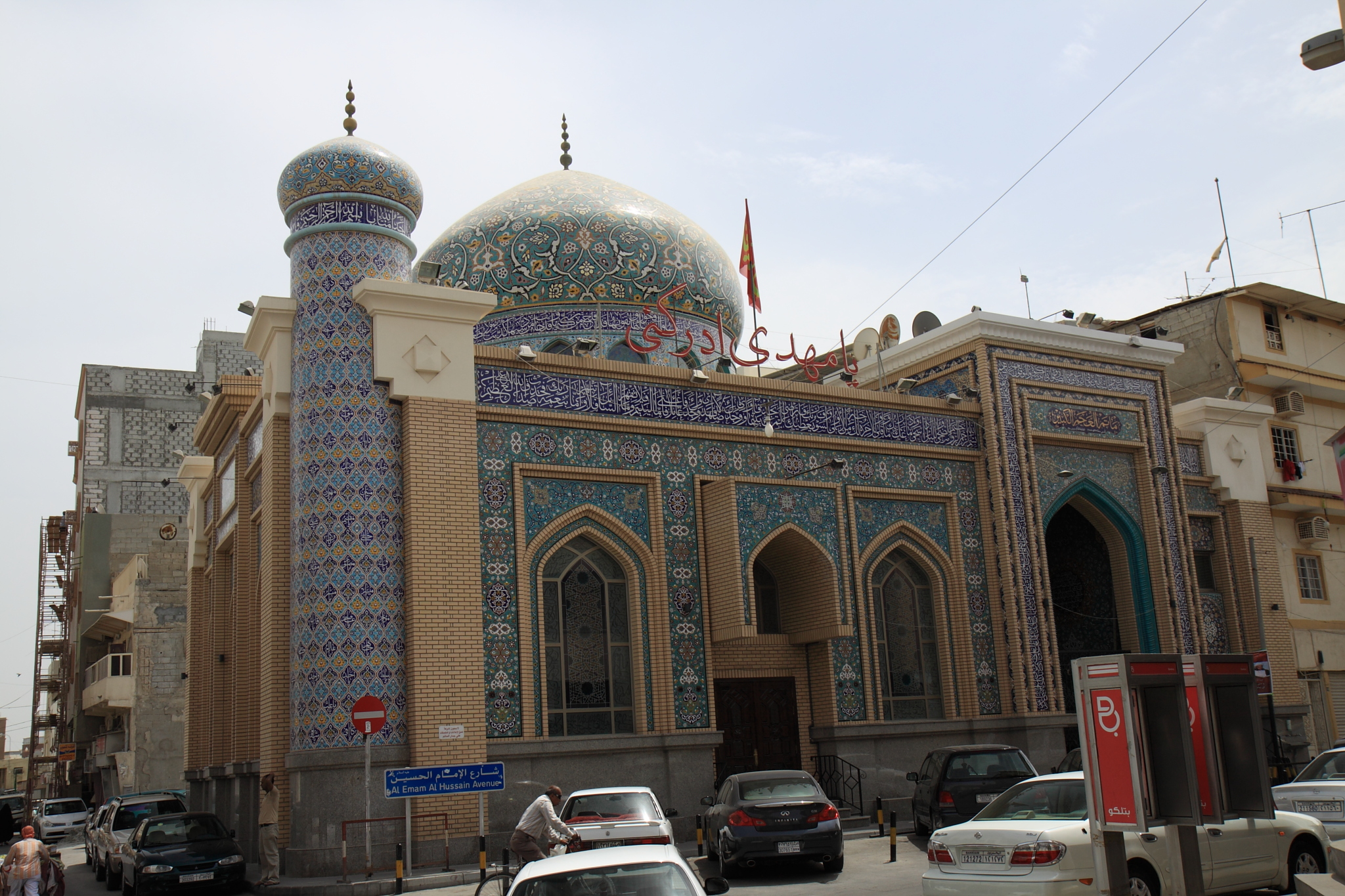
Exterior of the matam
The matam is still used for this purpose.  It was originally built with simple construction material such as palm tree trunks and leaf stalks. The matam was formally established in 1904 where it was decided that the matam would be renovated with rocks, clay and cement. Initially in the 1890s, the matam was primarily supported by Persian merchants, with two-thirds of the donation coming from the Bushehri and Safar family, respectively.

 For much of the 20th century, the matam had relied on yearly donations of money and land from rich and poor members of the Persian community and from waqf revenue.The matam also had an emergency relief fund that was to be distributed to the poor and to needy individuals; the matam provided financial aid and shelter to people following the collapse of the pearling market in the 1930s.

Upon the death of Abdul Nabi Al Kazerooni in 1927, Abdul Nabi Bushehri, himself a Persian immigrant from Bushehr and a well-respected figure in the Persian community, took control of the matam. Unlike Kazerooni, Bushehri ran the matam with other notables of the Persian community, forming a de facto board.

Upon Bushehri's death in 1945, the board took over. In order to prevent confusion, the board appointed Hasan Baljik, himself a member, as the budget and procession organiser. In 1971, an administrative board consisting of a president, vice president, secretary, treasurer and others was set up, all of whom were rich merchants. By 1952, the matam was supported by the rent of 3 houses, 6 shops and a hawla.
The interior of Matam al Ajam al Kabeer, in 2008

For further reading, I strongly recommend reading Mapping the Transnational Community: Persians and the Space of the City in Bahrain, c. 1869-1937, by Nelida Fuccaro. It provides an excellent overview and is one of the scarce resources available on this topic. And Khuri's Tribe and State in Bahrain.

Tuesday, 30 October 2012

A Brief History of the Great Syrian Revolt (1925-1927)


Foreword: This is just a brief outline of the Great Syrian Revolt (sometimes termed as The Great Druze Revolt) so there are bound to be stuff missing, since this is a summary!
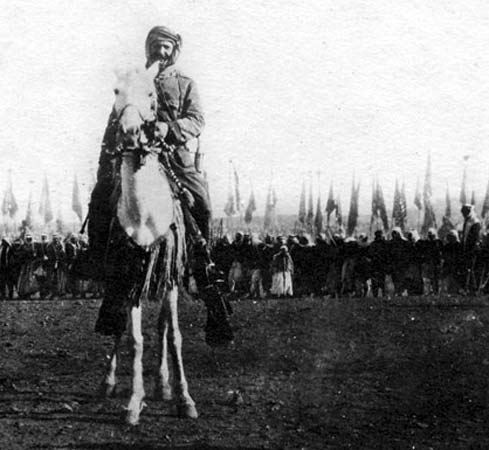
Military band marking the proclamation of Faisal as the King of Syria

As you might already know, after the First World War, the Ottoman Empire was divided between France and the United Kingdom. UK got Iraq, Jordan and the Palestine region while France got the Levantine region, consisting of Lebanon and Syria.

So why the revolt?

Now, the problem was that the Arabs fought on the British side during The Great War and wanted to establish their own state in the region of Syria (and beyond). So, in March 1920 (under King Faisal of the Hashemites), the Kingdom of Syria was proclaimed. The French were not amused and 4 months later, the Kingdom of Syria fell when the French invaded and occupied Damascus.

The years that followed 1920 were hardly peaceful, bastions of resistance towards the French sprung up across the country but they lacked centrality or unity. It was usually a single ethnic group with limited coordination with other factions. Alawites, Druze, Bedouins, Sunnis all individually attempted to revolt against the French in the following five years after 1920. Though the French had control of the urban areas (with the aid of the social elite) of Damascus, Aleppo and others, very little evidence of a French presence existed in the villages.
Damascus in flames, circa 1925.

In 1925, another open revolt emerged in Syria. What makes this one different from previous attempts was the presence of multiple factions (Alawites, Druze, Sunnis etc.) in a de-facto alliance. I use "de-facto" because, like previous revolts, no centrally-coordination was present.

The revolt was initiated by the Druze leader and Syrian nationalist Sultan al-Atrash issuing a call to arms and resistance against the French. The revolt was successful in its initial stages and lead to the capture of Druze-majority cities in the south of Syria (see here), owing to the minimal presence of French soldiers (there were 14,397 soldiers in Syria in 1925, compared to 70,000 in 1920). The French countered this by deploying thousands of soldiers from its colonies, with weapons superior to those of the Syrian rebels.
Sultan al-Atrash and soldiers at Hauran

The revolt was not put down until the spring of 1927, after the French had retaken all the major cities of Syria. The uprising led to the French government to conclude that direct rule over Syria was too costly, owing to the transport and supply of soldiers. A year after the uprising, France declared an amnesty to the Syrian rebels but proclaimed that Sultan al-Atrash and other leaders of the rebellion would be exiled.

This was not a problem.The French sentenced Sultan al-Atrash and other national leaders to death, but al-Atrash escaped with the rebels to Transjordan and was eventually pardoned. In 1937, after the signing of the Franco-Syrian Treaty, he returned to Syria where he was met with a huge public reception.

Saturday, 20 October 2012

Women in History: A Gallery

Continuing with the theme of women's history, often a-times, I believed that the best way of portraying a situation was through photos and pictures. Better yet through videos too. Below are photos taken from all aspects of history, showcasing women's role in history.

A women's march in Kabul, Afghanistan, in the early 1980s.

 Elin Wägner (Swedish writer, journalist, feminist, teacher, ecologist and pacifist)  standing next to 351,454 signatures demanding women get the right to vote in Sweden. Photo taken in 1914.

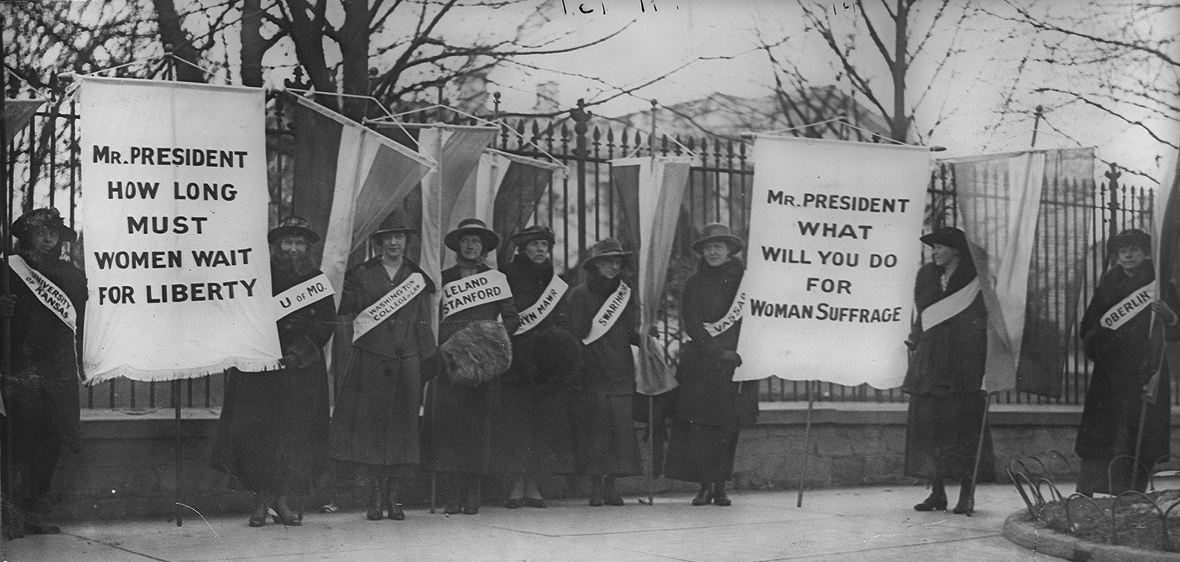
Women Suffragists picketing the White House in 1917 
Christian woman of Zahleh (middle) and two Christian women of Zgharta, Lebanon - 1873.
Native American women with their children visit the USS Bear, Bering Sea. Circa 1900.
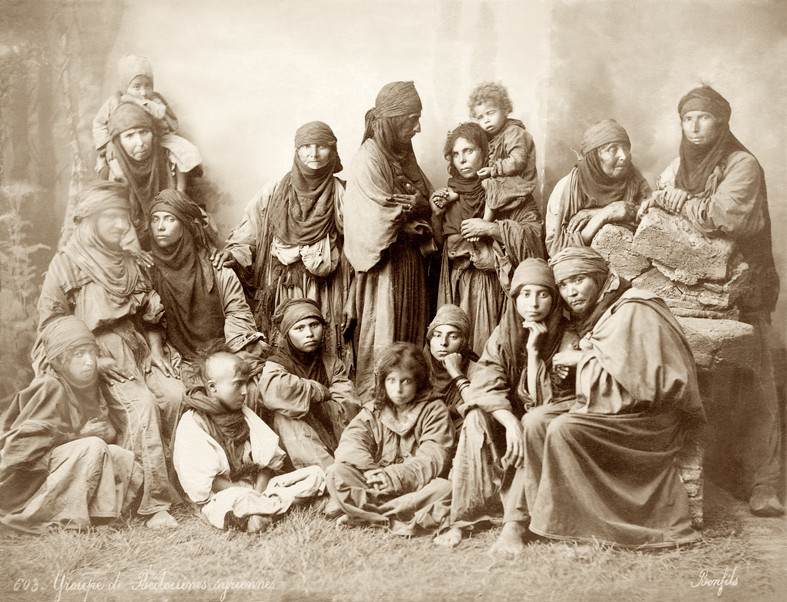
Group of Bedouin women and children in Palestine region, ca.1890s.
A Palestinian women begs for her husband's life as Phalangist militiamen attack La Quarantaine refugee camp. Lebanon circa. 1976.
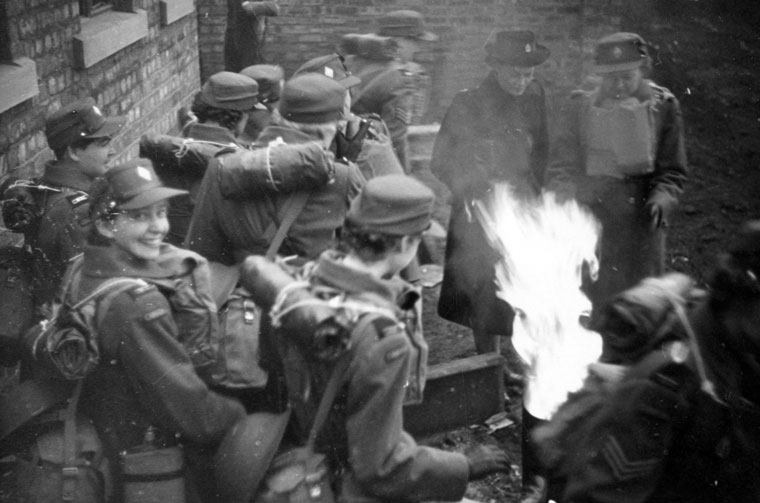
Canadian Women's Army Corps in 1944 (That smile!).
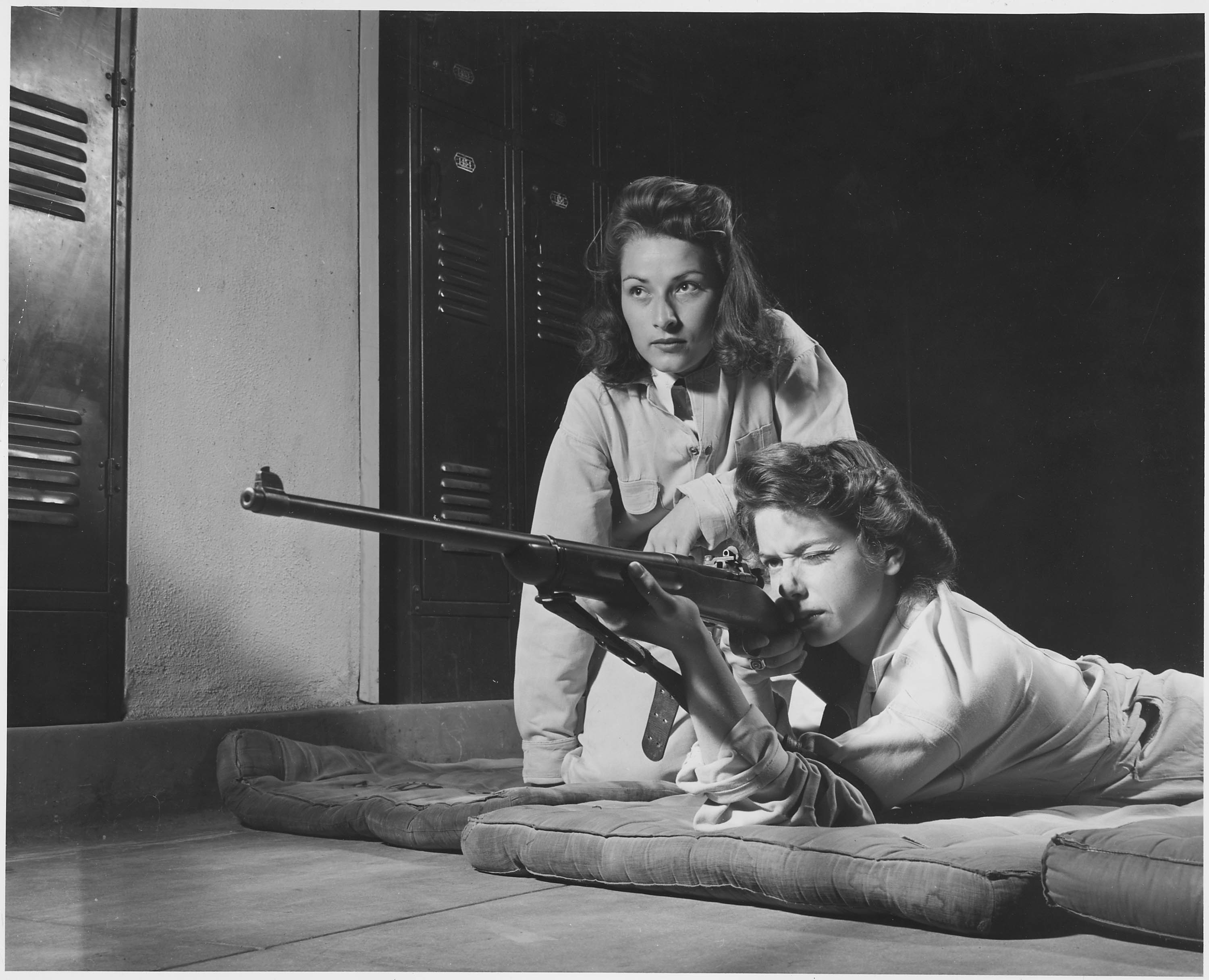
Women in marksmanship training in America, 1942.
Women's archery 1908 Olympics in London (though I wonder why they're aiming 180 degrees away from the target).
With all the men at the Front, Moscovian women dig anti-tank trenches around Moscow in 1941.
A photo from AP in German-occupied France: A women of the resistance movement, who is a member of a patrol to rout out the Germans snipers still left in areas in Paris, France, on August 29, 1944. The girl had killed two Germans in the Paris Fighting two days previously. 
 Egyptian Jewish girls celebrate their Bat Mitzvah in Alexandria, Egypt. Photo definitely taken prior to 1967.
Female Irish Republican Army (IRA) members frisk a British man, in Belfast, 1972.
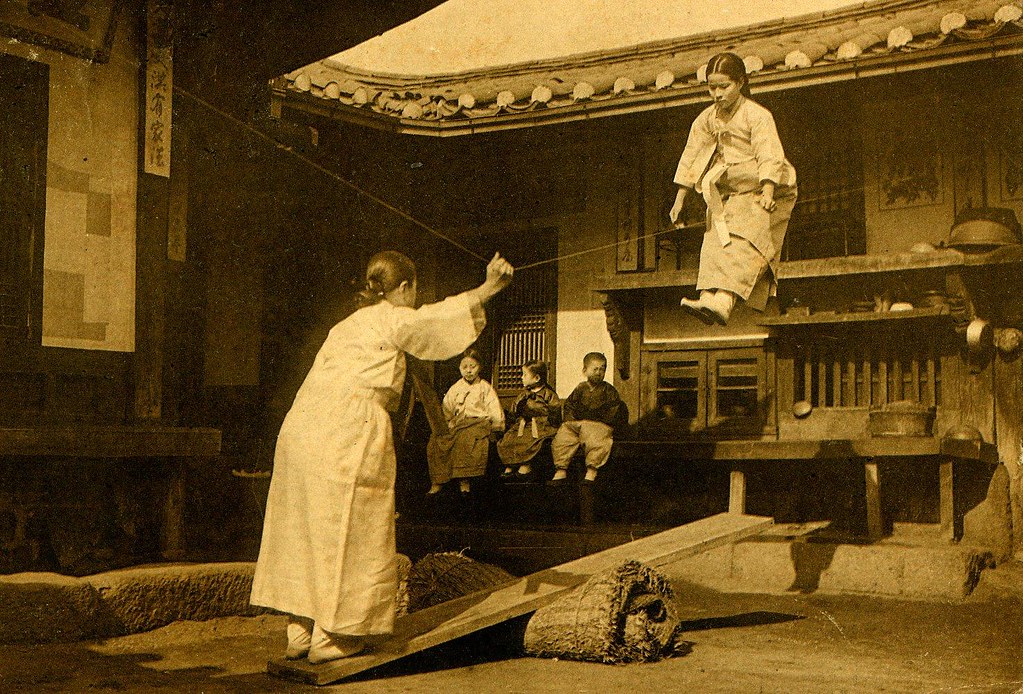
Korean girls playing Nol-Ttwigi (Korean See-saw) in old Chosŏn, Korea, 1890s.
  An Iranian student at a vocational training school for seamstresses studies the theoretical aspects of her work. This is one of the first schools for girls founded by the government in Tehran, 1952.
 In the jungles of El Salvador, a young girl with the left wing FMLN guerrilla movement, starts another day of brutal civil war. Circa 1983

Friday, 12 October 2012

Women in History - The Story of Jeanne Geneviève Labrosse

The parachute patent, made by Jeanne's husband, Andre Gamerin
Jeanne Geneviève Labrosse was a French woman who lived from 1775 to 1847. Why is she important, you might ask? She was the first woman to jump from a balloon with a parachute, from an altitude of 900 meters.

Why on earth would she jump? Well, she did marry André-Jacques Garnerin, a hydrogen balloonist and inventor of the frameless parachute!

Though she started flying on a balloon on her own in 1798, she is most famous for being, on October 12, 1799, the first woman to make a parachute descent (in the gondola), from an altitude of 900 meters.

She was one of the earliest women to fly in a balloon but keep in mind, she wasn't the first; Élisabeth Thible had made a free flight in 1784, and Citoyenne Henri had flown with Garnerin on July 8, 1798, four months earlier to Jeanne's attempt in 1798.

On October 11, 1802, she filed a patent application on behalf of her husband for:
"a device called a parachute, intended to slow the fall of the basket after the balloon bursts. Its vital organs are a cap of cloth supporting the basket and a circle of wood beneath and outside of the parachute and used to hold it open while climbing: it must perform its task at the moment of separation from the balloon, by maintaining a column of air."

Thursday, 4 October 2012

Women in History: Marie Curie

Marie Curie was a Polish-born physicist and chemist and one of the most famous scientists of her time. Together with her husband Pierre, she was awarded the Nobel Prize in 1903, and she went on to win another in 1911.

Early Life:

Marie Curie was born in Warsaw in modern-day Poland on Nov. 7, 1867. Her parents were borth teachers, and she was the youngest of five children. As a child Curie took after her father, Ladislas, a math and physics instructor. She had a bright and curious mind and excelled at school. But tragedy struck early, and when she was only 11, Curie lost her mother, Bronsitwa, to tuberculosis.

A top student in her secondary school, Curie could not attend the men-only University of Warsaw. She instead continued her education in Warsaw's "floating university," a set of underground, informal classes held in secret. Both Curie and her sister Bronya dreamed of going abroad to earn an official degree, but they lacked the financial resources to pay for more schooling. Undeterred, Curie worked out a deal with her sister. She would work to support Bronya while she was in school and Bronya would return the favor after she completed her studies.

For roughly five years, Curie worked as a tutor and a governess. She used her spare time to study, reading about physics, chemistry and math. In 1891, Curie finally made her way to Paris where she enrolled at the Sorbonne in Paris. She threw herself into her studies, but this dedication had a personal cost. With little money, Curie survived on buttered bread and tea, and her health sometimes suffered because of her poor diet.

Curie completed her master's degree in physics in 1893 and earned another degree in mathematics the following year. Around this time, she received a commission to do a study on different types of steel and their magnetic properties. Curie needed a lab to work in, and a colleague introduced her to French physicist Pierre Curie. A romance developed between the brilliant pair, and they became a scientific dynamic duo.

Scientific research:

The Curies worked together investigating radioactivity, building on the work of the German physicist Roentgen and the French physicist Becquerel. In July 1898, the Curies announced the discovery of a new chemical element, polonium. At the end of the year, they announced the discovery of another, radium. The Curies, along with Becquerel, were awarded the Nobel Prize for Physics in 1903.

Pierre, Irene and Marie Curie
Pierre's life was cut short in 1906 when he was knocked down and killed by a carriage. Marie took over his teaching post, becoming the first woman to teach at the Sorbonne, and devoted herself to continuing the work that they had begun together. She received a second Nobel Prize, for Chemistry, in 1911.

The Curie's research was crucial in the development of x-rays in surgery. During World War One Curie helped to equip ambulances with x-ray equipment, which she herself drove to the front lines. The International Red Cross made her head of its radiological service and she held training courses for medical orderlies and doctors in the new techniques.

Despite her success, Marie continued to face great opposition from male scientists in France, and she never received significant financial benefits from her work. By the late 1920s her health was beginning to deteriorate. She died on 4 July 1934 from leukaemia, caused by exposure to high-energy radiation from her research. The Curies' eldest daughter Irene was herself a scientist and winner of the Nobel Prize for Chemistry

The Deforestation of Nabih Saleh in Bahrain - in Maps!

 This post is an example of the invaluable information and data provided by the groundbreaking people at mapBH . For those unaware, mapBH is...