Thursday, 27 June 2013

My visit to Canterbury, London and beyond

Frequent readers may note that the blog has been quiet as of late this month but don't worry, I have a perfectly valid excuse, at least from my point of view. This month, I had a hectic visit to the UK to visit some relatives and generally do a bit of sightseeing. I've been to the charming Cathedral-and-University-town of Canterbury in England's garden region of Kent for around 10 days, after which I took the train to incredibly-complicated and ever-so-noisy London (I admit, I favoured Canterbury better) where, as you can imagine, I loitered immensely at the museums there.

I don't usually do personal posts but I suppose it's been too long since the last one. Instead of presenting a wall of text, I'll post photos of the stages of my trips, from Bahrain Airport's departure till Heathrow's, and I'll try to keep it short (I took 400 photographs, incredibly).

Bahrain Airport and Departure:
I got the window seat and being the over-excited person I am, I snapped photos out the window. In my defence, it was a six-hour flight.

Morning flights are the worst.

Basra's river networks.


This is probably Basra. Probably.

We approached the mountains of Kurdistan


This is somewhere over Central Anatolia but I forgot its name.


Shadows of clouds!

Its shadow reminded me of Asia, somehow.

Still in Turkey, it's amazing how clouds look like from above.


The Romanian coastline, from the Black Sea. First time I see Europe.

Another view of the coast. Romania is green....

...and just as cloudy as Turkey.

Hungary and Austria were super-cloudy, I assumed it was flooding.

Spotted this monster cloud just south of Dresden (6 June)

I see German land for the first time!

Approaching the Netherlands

Final piece of continental Europe, Dutch land reclamation fully visible.
Train ride!
This was the first time I ever used a train so naturally, I was overly excited. The train moved so fast and at times, I thought we'd hit the train on the other side of the tracks! Note to self, never sit by the window ever again.


I think I now realise why Kent is called England's garden.

Canterbury:

Canterbury is a small city located in southeast England and a popular tourist destination amongst the British (and generally anyone who likes really old buildings). The pride of the city is the majestically built Canterbury Cathedral that was first founded in 597 AD, which also hosts the leader of the Anglican Church, the Archbishop of Canterbury. Aside from that, the hub of the city is the seemingly never-ending multitude of ancient buildings lining up High Street, forming Canterbury's city centre. One observation I've made is that, as a person coming from a country were public transportation is neglected, the amazing efficiency of the bus system in the city came as a surprise. It was well maintained and reasonably cheap, I only wished this was the case in Bahrain.
Old Blighty lives up to its name.

Old and new Canterbury; the city walls - now a walkway!

Canterbury castle's walls were walking paths! How awesome is that?
A mound dating back to Roman times.

Found this close by (stupid graffiti)
One of the many ruined towers along the walls.

It goes on for a while.

To your left; trees growing in the adjacent park (I've never seen so much greenery)
To your right, asphalt.

These flowers were everywhere. Can someone identify them?

This was in the park, it looked stunning.

Amazing view.

I found so many pennies in the fountain

Canterbury's city centre! So busy and bustling with tourists.

And the first museum I visit; nicknamed The Beaney.

2:30pm 27/6/2013 - Well that is enough photos for now at least, due to time constraints I'll post more photos of my trip at a later time (making this one really long photo-post). Thank you for your patience and be sure to leave your thoughts in the comment section. 
 x___________x______________x________________x_____________x______________x

10th of July, 2013 - Well that was a rather long break. To compensate, here are some photos from the Beaney.

From what I gathered, the Royal Museum & Free Library (cutely called The Beaney) is dedicated primarily to a Canterbury-born Dr. James Beaney, a Victorian surgeon in the British army who served in the Crimean War and later became a politician in Australia. In the building, there was also a permanent art gallery showcasing the works of the renown English landscape artist, Thomas Sidney Cooper, who had a thing for cattle.

A friend told me the place was basically the treasure house of a Victorian adventurer... he wasn't joking.

A donation from the public in the Cooper exhibit.

One of his works (apologies for the horrible quality)

It has to be said that this looks more impressive in person.

Upstairs in the building lies Oriental "loots", such as this camel skull.

And the obligatory ancient-Egyptian cat statues.

Medals belonging to Dr. Beaney (he was a busy man)

A letter written in blood, showcased on the top floor.

Trophies amongst others.

More loot from the Orient.

This was in the animal exhibit. A stuffed falcon, I believe.

More stuffed birds.

A fox... (Look away, bunny)

Stuffed red squirrels

Materials were also on display.

I've always wanted to see a badger...

Taj Mahal painting in the museum.

And amazing china.

If only I remembered to look at the labels.
A bust of Dr. Beaney, I presume?

These paintings were beautiful. More so in person.

Literally a letter in a bottle. Try to read it.

This is a seed! (Allegedly)

More medals for Dr. Beaney, I suppose.

One thing has to be stressed, the stained windows were gorgeous.
 This concludes this update. Next time, I'll be posting photos from the Canterbury Heritage Museum and if time permits, Whitstable! Ciao.

Tuesday, 7 May 2013

Ebrahim Al-Arrayedh: The Life of a Bahraini Poet

Ebrahim Al-Arrayedh (in Arabic: إبراهيم العريّض‎, born 8 March 1908 – died May 2002) was a Bahraini writer and poet, and is generally considered to be one of Bahrain's greatest poets and one of the leaders of the Bahraini literary movement in the 20th century. In this article, we'll try to see why he is regarded as such.

Biography:

Arrayedh was born in Bombay, India to his Bahraini parents on 8 March 1908. In 1922, he visited Bahrain for the first time at age 14, where he started his education at the country's first school, the Hidaya al-Khalifa school though he did not permanently reside in the island. He returned to Bombay in 1926 and enrolled at a local school where he earned his high school diploma. It was at this school that Al-Arrayedh studied Farsi and the English language, alongside Urdu, and had expressed a deep interest in Urdu literature. He later studied Urdu literature at the Aligarh Muslim University.

In 1927, Al-Arrayedh returned to Bahrain and was appointed as an English teacher in the Hidaya al-Khalifa school, a position he held for four years. He later became the deputy director of the Jafari school though he was forced to quit his job over disputes with the British colonial authorities. After this, he served as a treasurer in the State Customs Service. In 1937, he moved on to become the head of a translation department in a Bahraini company, which did not last as a result of the outbreak of World War II. In 1943, he traveled to Delhi and worked at a radio station. He later returned to Bahrain where he worked for the Bahrain Petroleum Company until 1967, when he retired.

Poetry and honours:

Since the age of 18, Al-Arrayedh began writing poetry, with his first set of poems being published in Baghdad in 1931. Since he was a multi-linguist, he translated the works of poets between Persian, Hindi, Urdu, English, and Arabic. His poems were popular in Iraq, Syria and Egypt; such that the American University of Beirut asked him to deliver lectures on Arab literature, which he had agreed to. Ebrahim published another collection of poems, The Dolls, in 1946. This was followed by another three compilations, two poetic dramas, four critical studies of Arabic poetry, one poetry collection in Urdu and another in English. He translated Al Khayami's Rubayat from Persian into Arabic in 1966. Throughout his life, Al-Arrayedh lectured widely and travelled extensively to participate in conferences and debates in the field of poetry

He was awarded the Shaikh Isa bin Salman Al Khalifa Order - First Class, by the Bahraini government.  He was also a noted reformer setting up a school, and was appointed head of the Constitutional Council by the emir Sheikh Isa Bin Salman Al-Khalifa. In short, Ebrahim was responsible for developing Bahrain's constitution in the early 1970s prior to independence from the United Kingdom. He served as Bahrain's ambassador-at-large (which is a diplomat of the highest rank or a minister who is accredited to represent his country internationally) in 1974 and later as ambassador extraordinary plenipotentiary at the Ministry of Foreign Affair, a position he held until his death in 2002.
Ebrahim al-Arrayedh in his later years

Death and legacy:

Ebrahim died in May 2002 at the age of 94, after suffering breathing problems. He was buried in the Manama graveyard, next to his late daughter Layla Al-Arrayedh who died the preceding year.

Following his death, the King Hamad bin Isa Al-Khalifa, named one of the Kingdom’s most geographically important roads after him — opposite the Bahrain Financial Harbour. In 2006, his old house, in Gudaibiya, in the capital city of Manama, was turned into a cultural centre, the Ebrahim Al-Arrayedh Poetry House, open to tourists and as a meeting place for poets.

In 2008, the United Nations Educational, Scientific and Cultural Organisation held an exhibition in Al-Arrayedh's honour in its headquarters in Paris, France.

Notable works:
(In Arabic, couldn't find a decent translation.) 
(A larger collection of his poems can be found here)

Monday, 25 March 2013

The World's First Airstrike

Gavotti aboard Farman biplane, Rome 1910
In April 2011, Italy had announced it would join NATO's air attacks in Libya, then in the middle of its civil war. It would later prove a classical case of history repeating itself.

A century ago, in September 1911, the Italian armed forces invaded Ottoman-held Libya with the intent of establishing an Italian colonial empire, something that Italy lacked whilst its French and German neighbors prided upon. This led to the Italo-Turkish war which dragged on until October 1912, with the Italians winning control of Libya, having subdued Turkish and Libyan resistance.

Insignificant as this war may seem to us, the Italian Turkish war saw numerous technological advancements deployed in battle. One of them, most notable, being aeroplanes.

This brings us to the story of a young Italian aviator, lieutenant Giulio Gavotti, who was deployed to Libya to oversee the transport of aeroplanes. But within a few months, Gavotti had done what no man had done before in warfare. Gavotti was the world's first air-bomber, only eight years after the monumental flight of the Wright Brothers at Kitty Hawk, North Carolina.

On the first of November 1911, Gavotti boarded his Etrich Taube aeroplane and took with him four grenades, weighing a kilo and a half each. Gavotti took off and headed for Ain Zara. It is now a town just east of Tripoli, but at the time he described it as a small oasis. There he would have expected to find Arab fighters and Turkish troops that were allied in the fight against the Italian invasion.
The type of plane used in the airstrike, the Etrich Taube

Flying at an altitude of 600 feet, Gavotti screwed in the detonators and tossed each grenade over the side of the plane. Whilst unknown, Gavotti's mission is believed to have been a failure, having failed to cause any reported casualties.

Back home in Italy, the Italian press was ecstatic, with many newspapers reporting the exploit in high regards, to strengthen support for the war at home. Gavotti had shown it was possible to use aeroplanes to aid warfare (a contrast to the Wright Brothers' opinion that aeroplanes were "tools of peace".) and may have inadvertedly paved the way for the horrors of Dresden, Hiroshima and countless others to occur.
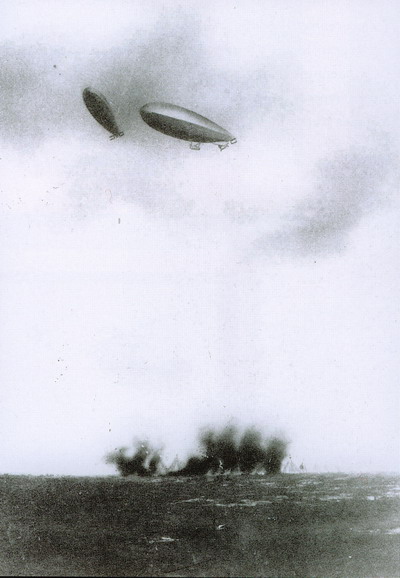
Zepplin bombing, during the Italian Turkish War, 1911.
Trivia:
Future dictator of Italy, Benito Mussolini (then a left-wing socialist), was vehemently opposed to the Italian-Turkish War.

Friday, 8 March 2013

The Surrender of Japan: A Brief Overview

Japanese foreign affairs minister Mamoru Shigemitsu signs the Japanese Instrument of Surrender on board USS Missouri as General Richard K. Sutherland watches, September 2, 1945
The surrender of the Empire of Japan on September 2, 1945, brought the hostilities of World War II to a close. By the end of July 1945, the Imperial Japanese Navy was incapable of conducting operations and an Allied invasion of Japan was imminent. While publicly stating their intent to fight on to the bitter end, the Empire of Japan's leaders, (the Supreme Council for the Direction of the War, also known as the "Big Six"), were privately making entreaties to the neutral Soviet Union to mediate peace on terms favorable to the Japanese. The Soviets, meanwhile, were preparing to attack the Japanese, in fulfillment of their promises to the United States and the United Kingdom made at the Tehran and Yalta Conferences.

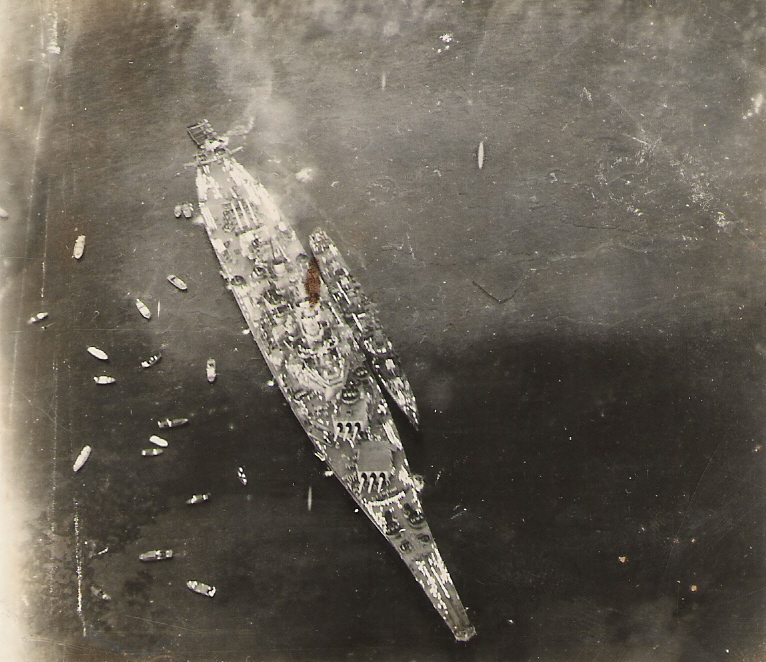
The USS Missouri on the day of the signing, 2 September 1945
 On August 6, 1945, the United States dropped an atomic bomb on the city of Hiroshima. Late in the evening of August 8, 1945, in accordance with the Yalta agreements, but in violation of the Soviet–Japanese Neutrality Pact, the Soviet Union declared war on the Empire of Japan, and soon after midnight on August 9, 1945, the Soviet Union invaded the Imperial Japanese puppet state of Manchukuo. Later that day, the United States dropped another atomic bomb, this time on the city of Nagasaki. The combined shock of these events caused Emperor Hirohito to intervene and order the Big Six to accept the terms for ending the war that the Allies had set down in the Potsdam Declaration. After several more days of behind-the-scenes negotiations and a failed coup d'état, Emperor Hirohito gave a recorded radio address to the Empire on August 15. In the radio address, called the Gyokuon-hōsō ("Jewel Voice Broadcast"), he announced the surrender of the Empire of Japan to the Allies.

General of the Army Douglas MacArthur signing the Instrument of Surrender on behalf of the Allied Powers
On August 28, the occupation of Japan by the Supreme Commander for the Allied Powers began. The surrender ceremony was held on September 2, aboard the United States Navy battleship USS Missouri (BB-63), at which officials from the Japanese government signed the Japanese Instrument of Surrender, thereby ending the hostilities in World War II. Allied civilians and military personnel alike celebrated V-J Day, the end of the war; however, some isolated soldiers and personnel from Imperial Japan's far-flung forces throughout Asia and the Pacific islands refused to surrender for months and years afterwards, some even as far as into the 1970s. Since the surrender of the Empire of Japan, historians have continually debated the ethics of using the atomic bombs on Hiroshima and Nagasaki.
The Japanese Instrument of Surrender (click for larger image)

The state of war between Japan and the Allies formally ended when the Treaty of San Francisco came into force on April 28, 1952. Four more years passed before Japan and the Soviet Union signed the Soviet–Japanese Joint Declaration of 1956, which formally brought an end to their state of war.

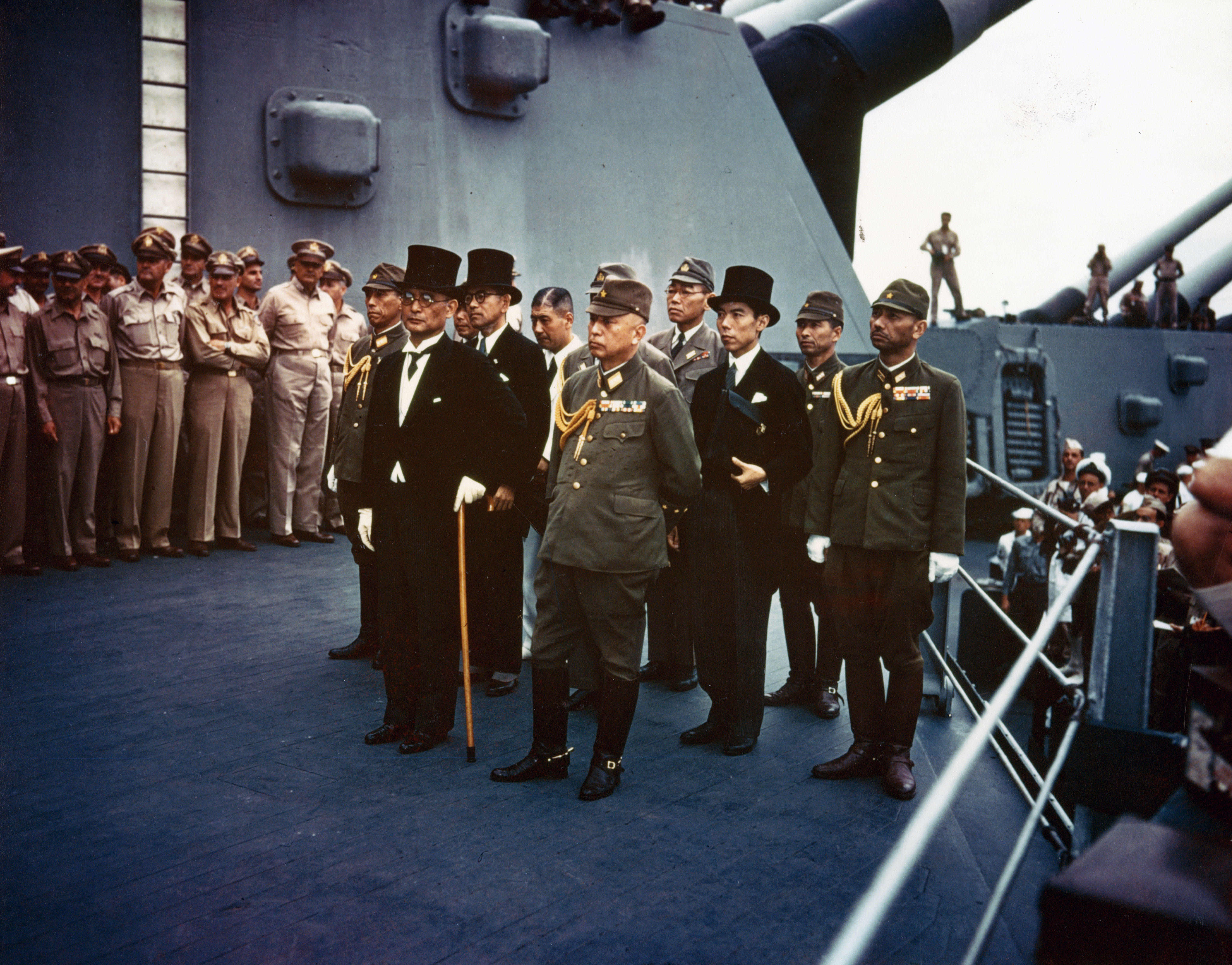
 Representatives of Japan stand aboard USS Missouri prior to signing of the Instrument of Surrender.

The Deforestation of Nabih Saleh in Bahrain - in Maps!

 This post is an example of the invaluable information and data provided by the groundbreaking people at mapBH . For those unaware, mapBH is...