Saturday, 30 June 2012

Book Review: Jerusalem: The Biography

I've always been a keen admirer of Jerusalem and after reading the book's blurb (see below), I knew this was one of the best books around. It did not disappoint.
"Jerusalem is the universal city, the capital of two peoples, the shrine of three faiths; it is the prize of empires, the site of Judgement Day and the battlefield of today’s clash of civilizations. From King David to Barack Obama, from the birth of Judaism, Christianity and Islam to the Israel-Palestine conflict, this is the epic history of three thousand years of faith, slaughter, fanaticism and coexistence.
 
How did this small, remote town become the Holy City, the “center of the world” and now the key to peace in the Middle East? In a gripping narrative, Simon Sebag Montefiore reveals this ever-changing city in its many incarnations, bringing every epoch and character blazingly to life. Jerusalem’s biography is told through the wars, love affairs and revelations of the men and women—kings, empresses, prophets, poets, saints, conquerors and whores—who created, destroyed, chronicled and believed in Jerusalem. As well as the many ordinary Jerusalemites who have left their mark on the city, its cast varies from Solomon, Saladin and Suleiman the Magnificent to Cleopatra, Caligula and Churchill; from Abraham to Jesus and Muhammad; from the ancient world of Jezebel, Nebuchadnezzar, Herod and Nero to the modern times of the Kaiser, Disraeli, Mark Twain, Lincoln, Rasputin, Lawrence of Arabia and Moshe Dayan.
"
This book was written by Simon Sebag Montefiore, his last name already being a significant part in Jerusalem's history, a Cambridge University alumni who studied history and is already well known throughout much of the literary world for his previous award-winning books, Catherine the Great & Potemkin which were shortlisted for the Samuel Johnson, Duff Cooper, and Marsh Biography prizes. 

His book "Stalin: The Court of the Red Tsar" won the History Book of the Year Prize at the British Book Awards. "Young Stalin" won the Costa Biography Award (UK), the LA Times Book Prize for Biography (US), Le Grand Prix de la Biographie Politique (France) and the Kreisky Prize for Political Literature (Austria). Montefiore’s books are published in over 35 languages. He is also the author of the  novel, Sashenka. (For a more in-depth biography)
 
 The book starts brilliantly with a prologue of the siege of Jerusalem of 70AD, by the Roman legions of (future-emperor) Titus against the Jewish rebels who occupied the city. The book officially begins with the Canaanite era of Palestine, going through the biblical eras of King David and Solomon. From the times of the Persians , Macedonians and Romans, to the time of the Byzantines, Arabs, Crusaders, Mamluk, Ottomans and British.

Simon Sebag Montefiore ©Hugo Burnand
The most stunning thing about this book is that it is remarkably neutral (that's a feat when considering a controversial topic like Jerusalem's history). "Jerusalem, the Biography" is a fitting title since the book is written as a biography, through the people who made Jerusalem, starting with King David and ending with Barrack Obama, over a span of 3000 years. Each section is about a person who, made, destroyed, believed in, or fought for Jerusalem, some are ordinary people, some are monsters and dictators. There is massacre, siege, blood, violence, but also brilliant, so very much brilliant poetry.

The story of Jerusalem, is truly (as the author expressed) the story of the world, as well, of the Middle East, of religion, of holiness, of empire! The goosebumps I had when I read about some of of the greatest philosophers, the Arab historiographer "Ibn Khaldoon" in the book, about Suleiman the Magnificent, Caliph Muawiya, Saladin Dynasty, the entire Outremer era with a brilliant inclusion of William of Tyre, the Druze princess and angelic voiced Singer "Asmahan", the Hashemite (Sherifian) Dynasty, and most exciting to read was some poignant poetry by Nizar Qabbani.

This book should be the "must-read" guide for journalists and public figures in the Levant region, the book isn't just a simple retelling of facts, it is much more. With stories, anecdotes, and pages and pages of researched history you really feel as if you are stepping back through time and experiencing Jerusalem's history first hand.

And if the 650 pages of 3,000 years of Jerusalemite history are not enough, the book even has multiple photos, and multiple maps of Jerusalem's Old City, of all the quarters, throughout much of its history, right up to 1948. I strongly recommend this book to anyone with an interest in Jerusalem, or the Middle East in general. This has been one of the best books I've read

Friday, 22 June 2012

The 'Golden Artists' of Lebanon

Lebanon has always been called the cultural capital of the Arab World, the go-to destination for most tourists in the region. So, it shouldn't be much of a surprise that Lebanon has produced some of the most gifted artists in the region. In this post, I'll bring up the works of 8 Lebanese artists, renown as being the 'Golden Artists' of Lebanon, so let's get started!

 Habib Srour (1860-1938):

Habib Srour , while in Rome as a child,studied at the Institute of Fine Arts and in 1890, he returned to Beirut after a long stay in Egypt. He taught art at the Imperial Ottoman School of Bashoura and had his own studio.
A self-made portrait of Habib Srour
The Patriarch El Hage
Saliba Douaihy (1910-1994):

The Lebanese government took an interest in him (because of his artistic talent) and sent him to Paris in 1932, where he completed his training and developed his contacts with the new European schools. In 1936, as a graduate from the National School of Fine Arts, he left for Rome. (You can read the biography here)

Ahmad Al Safi Al Najafi
Conversation
 Later in his career, he drifted towards more abstract work.

Paul Guiragossian (1927-1993):

Born in Jerusalem in 1926, Paul Guiragossian's early education was strictly religious.In 1944 he began his artistic training at the Italian Academy Pietro Iaghetti, then between 1946 and 1949 at the Institute Yarcon.
He completed his formative period by attendingthe Florence Academy of Fine Arts in 1956. After that, he widened his circle of contacts with the West and spent three years in France and as many in the USA.

The Old Bridge
Rhythme
 (Visit the official website for more paintings and information)

Cesar Gemayel (1898-1958):

Flower in a vase
Artist's house
Chafic Abboud (1926-2004):

Chafic Abboud was born in Lebanon in 1926 to a wealthy middle-class Lebanese family and his youth was an idyll of summers in the mountains, and winters in Beirut.
Having moved to Paris after graduating from the Lebanese Academy of Fine Arts in 1947, Abboud frequented Andre Lhote’s workshop and was a pupil of the Cubist Master Fernand Leger.

With the end of the Second World-War, the Parisian art scene had moved towards Abstract Expressionism and Abboud’s style characterized by loose brushwork and a lack of figurative subject matter, reaffirmed the artist as an unmistakable child of the movement.

In 1952 he enrolled at the prestigious Ecole des Beaux-Arts where he studied drawing and engraving. In 1959 Abboud participated in the first Biennale to be held in Paris. He was awarded the Prix Victor Choquet in 1961, and consequently was granted solo exhibitions in France, Lebanon, Italy, Germany, Holland and Denmark. His works are found in the permanent collection of the Centre National d’Art et de Culture Georges Pompidou, Paris and hanging on the walls of French government buildings. A catalogue raisonne of Abboud’s work has recently been published by Galerie Claude Lemand, Paris.

Abboud lived in Paris until his death in 2004. 

Post card
La boîte à images
Couvent Mar Elias, Chouya
 Rachid Wehbi (1917-1993):


Portrait
The palm
Road to Sidon
These artists were believed to have been the pioneers of art during their time, their works are testament to that.

Sunday, 17 June 2012

Ottoman Greece, Independence and the World Wars

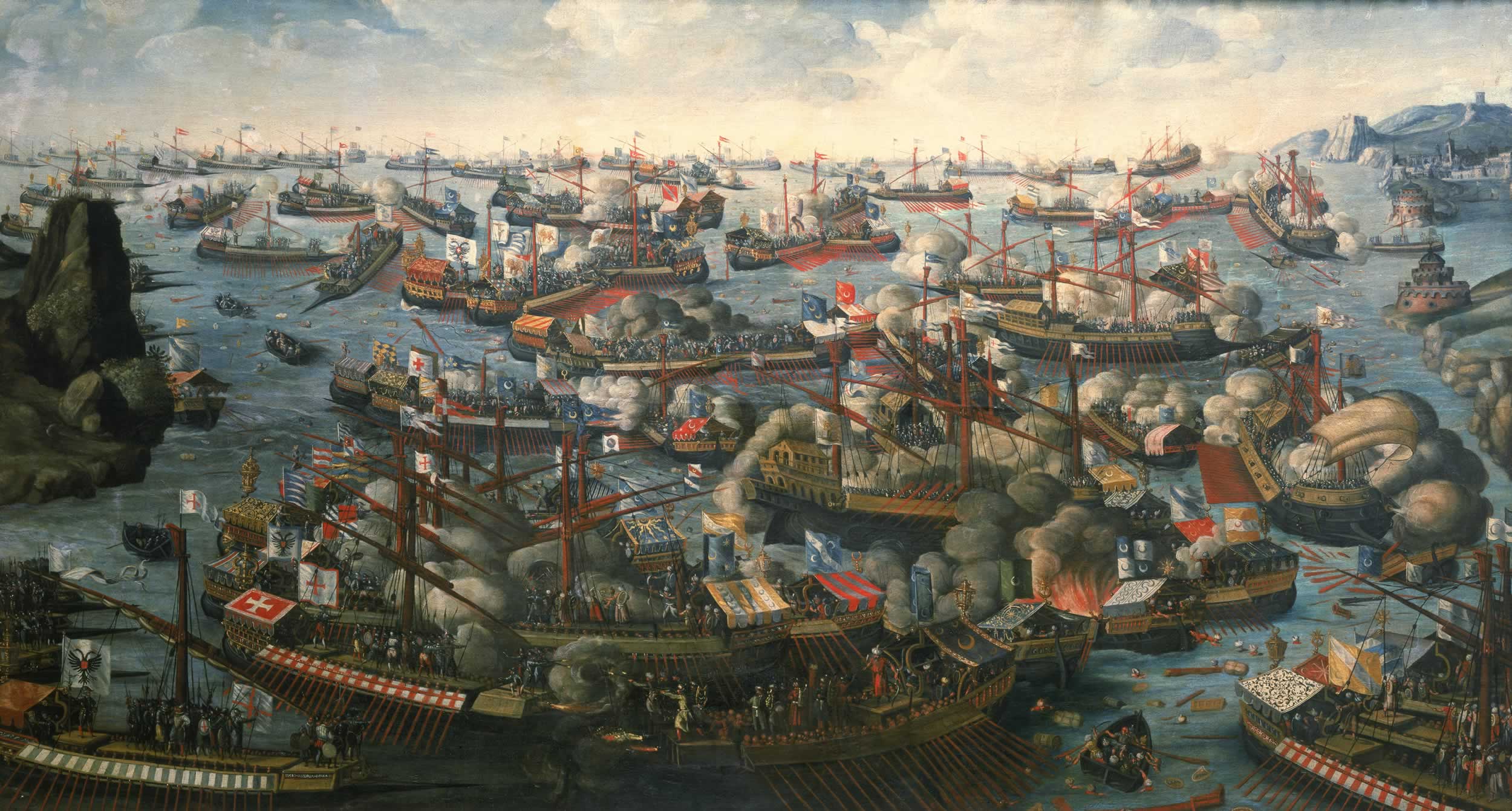
An artist's impression of the Battle of Lepanto (from National Maritime Museum)
By the start of the 1500s, much of mainland Greece and its islands were under Ottoman control, with the notable exceptions of Cyprus and Crete which were under the control of Venice (these two islands would later be conquered in 1571 and 1670 respectively). While most Greeks residing in Constantinople (the Ottoman capital) enjoyed a prosperous living, the majority of Greeks in mainland Greece were poor. This was a result of heavy taxation and an inefficient serfdom system.

In Constantinople, the Sultan recognized the Greek Orthodox Church to be the sole representative of Christians in the empire, Orthodox or not (this is evident when the Greeks were given preference over other sects in the custodianship of the Church of the Holy Sepulcher, as highlighted in an old post). Despite the Ottomans having a policy of no forced-conversions, many Christians and others converted for tax benefits.

Greeks generally had a negative feeling towards their Ottoman occupiers, participating in most wars against them. This has been notably seen in the naval Battle of Lepanto in 1571, as well as many revolts in the Great Turkish War of Europe in the late 17th century. These rebellions were quelled violently.

Greek Independence:

Greek independence movements emerged at the start of the 19th century (1814), most notably was the secret-organization Filiki Eteria , which had the main goal of achieving Greek independence and expelling the Ottomans from Greece. The Greek War of Independence kicked off on the 6th of March, 1821, initially as a revolt occurring in the Wallachia region (in present-day Romania). This revolt was successfully repressed by the Ottomans.
The flag of Filiki Eteria

News of the suppression reached Greeks in the Peloponnese (a peninsula in Southern Greece) and enraged them. On the 17th of March, 1821, Greeks in the region started rebelling. Within a month, the whole peninsula was in open revolt. Simultaneous revolts occurred in Macedonia, Crete and Central Greece, though each of these revolts were suppressed. The Ottomans, called upon Egypt (which was effectively a vassal state of the Ottomans) for aid.

In return for territorial gain, an Egyptian army was deployed to the Peloponnese in February 1825 and had immediate success: by the end of 1825, most of the Peloponnese was under Egyptian control, and the city of Missolonghi—put under siege by the Turks since April 1825—fell in April 1826. The Egyptians had succeeded in suppressing most of the revolt in the Peloponnese and Athens had been retaken.

After years of consulting with each other and intense negotiations, the European powers (Russia, France and the United Kingdom) agreed to intervene by deploying their navy to the Greek peninsula. This allied fleet clashed with the Ottoman-Egyptian fleet , resulting in the destruction of the Ottoman-Egyptian fleet. With French troops, the Greeks drove the Turks out of the Peloponnese and central Greece by 1828.

"Freedom or Death"

By 1832, the war was over via the Treaty of Constantinople (1832) and the Kingdom of Greece was established, the first Greek state since the pre-Byzantine era. It would seem appropriate that its national anthem would later be titled "Freedom or Death".

The slow but steady growth of Greece to the modern day

The rivalry between the Ottomans and Greeks did not end just yet. The Greeks were united, in their determination to liberate the Greek-speaking provinces of the Ottoman Empire. Especially in Crete, a prolonged revolt in 1866–1869 had raised nationalist fervour. When war broke out between Russia and the Ottomans in 1877, Greek popular sentiment rallied to Russia's side, but Greece was too poor, and too concerned of British intervention, to officially enter the war. Nevertheless, in 1881, Thessaly and small parts of Epirus were ceded to Greece as part of the Treaty of Berlin, while frustrating Greek hopes of receiving Crete.

Greeks in Crete continued to stage regular revolts, and in 1897, the Greek government under Theodoros Deligiannis, bowing to popular pressure, declared war on the Ottomans. In the ensuing Greco-Turkish War of 1897 the badly trained and equipped Greek army was defeated by the Ottomans. Through the intervention of the Great Powers however, Greece lost only a little territory along the border to Turkey, while Crete was established as an autonomous state under Prince George of Greece.

As a result of the Balkan War, Greece's overall territory once again increased.

World Wars:

 On the eve of WWI, the Greek government was divided between the pro-German King Constantine and the pro-Britain Prime Minister Venizelos. The division was so serious that there were two de facto governments, the King's government was based in Athens while the Prime Minister's was in Thessaloniki. In 1917, the two governments united and Greece would later enter the war on the side of the Triple Entente (the British-French-Russian side). Greece's old enemy , the Ottoman empire, was on the Central Powers' (Germany) side. Once again, the two rivals clashed.

Territorial changes as stated in the Treaty of Sevres

After the war ended, the Ottoman Empire was forced to sign the Treaty of Sèvres (text here) which effectively partitioned the empire between the victorious Allies. Iraq, Syria, Palestine, and much of the Ottoman heartland of Anatolia was to be carved up by the British, Greeks, French and Armenians. The Turkish public was outraged and, under the leadership of WWI Turkish veteran Mustafa Kemal, fought a series of wars called the Turkish War of Independence. One of these wars was the Greco-Turkish War that lasted from 1919 to 1922.

The war was disastrous for the Greeks, with Greek losses amounting to almost 20,000 dead as well as over 100,000 casualties. The war ended with Greece returning to pre-war boundaries and leading both sides to exchange populations (Greeks in Turkey to Greece and vice versa). A testament to this change was that the population of Greeks in Istanbul dropped from 300,000 in 1900, to just over 3,000 currently. Over 1.5 million Greek refugees arrived in Greece.

In 1924, the monarchy was abolished via a referendum and a Second Hellenic Republic was proclaimed. Though, a decade later, the monarchy was restored once again in 1935. A coup occurred in 1936 which installed fascist elements into the government. Though it was primarily fascist, Greece was still friendly to the Allied powers and not aligned with the Axis.

German war flag being raised in Athens
On 28 October 1940 Fascist Italy demanded the surrender of Greece, but the Greek government refused. As a result, the Greco-Italian War followed and effectively saw Greece enter WWII on the side of the Allies.

Greece repelled Italian forces into Albania, giving the Allies their first victory over Axis forces on land. The country would eventually fall to urgently dispatched German forces during the Battle of Greece (Wikipedia covers it extensively here). The German occupiers nevertheless met serious challenges from the Greek Resistance. Over 100,000 civilians died from starvation during the winter of 1941–42, and the great majority of Greek Jews were deported to Nazi extermination camps By the time the war was over, over 400,000 Greeks perished (the vast majority being civilians).

After the war was over, a power vacuum emerged. The Communist party (backed by Yugoslavia, Albania and Bulgaria) wanted to rule over Greece but they were met with opposition from the 'democratic government' (backed by UK and USA). A brutal three-year civil war occurred between 1946 to 1949. Greece was one of the first theaters of the Cold War.

This distrust and tension between the two sides lasted for more than three decades and caused political polarisation. In 1965, after the Greek King dismissed the government, a coup deposed the King and ushered in a military junta. The brutal suppression of the Athens Polytechnic uprising on 17 November 1973 sent shock-waves through the regime, and a counter-coup occurred. On 20 July 1974, as Turkey invaded the island of Cyprus, the military junta regime collapsed.
Present-day Cyprus. Nicosia remains the only divided capital in the world

 On 14 August 1974 Greek forces withdrew from the integrated military structure of NATO in protest at the Turkish occupation of northern Cyprus .The first multiparty elections since 1964 were held on the first anniversary of the Polytechnic uprising. A democratic and republican constitution was promulgated on 11 June 1975 following a referendum which chose to not restore the monarchy.

Relations with neighbouring Turkey improved when successive earthquakes hit both nations in 1999,ushering in greater cooperation and leading to the lifting of the Greek veto against Turkey's bid for EU membership. In 1981, Greece joined the European Communities (a precursor to the European Union) and an economic boom followed.

Poster's comment:
That concludes the post. I felt that a country, with such a rich history, should have more positive news. I honestly wish for the best for Greece. I hope that you, dear reader, would appreciate what Greece has been through throughout its most turbulent years and I am confident, that one day, Greece will rise up again.

Saturday, 16 June 2012

An Introduction to Ancient Greek History

Greece has been in much of the headlines, in the past year or so, unfortunately. With all the negative publicity Greece has been getting, I thought it would be a good idea to dedicate this post (and another post about their post-Ottoman period tomorrow) to Greece and the Greek people, hoping that people will remember what the country, as a whole, has been through in its entire history, since the time of the city states to the post-WWII Greece.

A map of Greece
Early History:

The earliest known civilization in Greece was the Cycladic civilization, that was based in the Aegean sea at around 3000 BC, the Minoan civilization in Crete (2700–1500 BC) and then the Mycenaean civilization on the mainland (1900–1100 BC). Two of the most celebrated works of Greek literature, the Iliad and the Odyssey by Homer, were written during that period.

In 776 BC, the first Olympic games were held. By this time, Greece was divided into many quarreling city states and kingdoms. These city states were not restricted to present-day Greece, but also were present in southern Italy, the coasts of the Black Sea as well as in Asia Minor.

Despite the rivalry between the city states, this period was generally seen as a prosperous one for Greece, resulting in advances in philosophy, science, mathematics and the arts.

By around 508 BC, the system of democracy was installed for the first time in the world's history, in Athens.  In 500 BC, the Persian empire had conquered much of Asia Minor and northern Greece. Faced by the imminent threat of the Persians, the Greek city-states tried but failed to expel the Persians from the north. This sparked the first invasion of Greece by the Persians in 492 BC, which would later be halted by a Greek victory in the Battle of Marathon in 490 BC.
A map of the war

Fast forward 10 years to 480 BC and the Persians launch a second invasion, most famously remembered for the Battle of Thermopylae which featured a numerically-disadvantaged Spartan force holding a last stand against a Persian invasion force. The Persians would later sack Athens. Later Greek victories at Salamis would later force the Persians to withdraw.

The main forces in the Greek city state alliance were Athens and Sparta. Both city states generally disliked each other, Athens being an intellectual haven while Sparta was primarily a warrior city. Relations between the two parties degraded and this led to a war, in 431 BC, between the two sides and their respective allies (called the Peloponnesian War, Peloponnesus being the name of the peninsula in southern Greece). The Spartans and their allies formed the Peloponnesian league while the Athenians and their allies in northern Greece calling themselves the Delian league.

The Peloponnesian league (with Persian aid) was victorious and decimated the Delian league, effectively destroying the Athenian empire. But it severely weakened most of the Greek city states, allowing the opportunistic kingdom of Macedon to take advantage and united the Greek states (minus Sparta) into a single entity in 339 BC, known as the League of Corinth, under the leadership of Phillip II of Macedon.

After Phillip II was assassinated in 336 BC, his son Alexander (popularly known as 'Alexander the Great' now) succeeded him. He would later launch a full scale invasion of the Persian Empire in 334 BC, using troops from almost all the Greek city-states. Greek victories at the Battle of Granicus, Guagemala effectively sealed the Persian Empire's fate. In 330 BC, the Greeks sacked Susa and Persepolis, the capital and ceremonial capital respectively. The empire Alexander had conquered spanned from Greece to India and Egypt. Alexander died a sudden death*, in Babylon in 323 BC, at age 32, before commencing a series of military campaigns which included an invasion of Arabia!**

 References:

*No one knows to what disease did Alexander succumb to, he was said to have been drinking heavily in the days prior to his death, and that he had developed a fever that rendered him incapable of speaking.

** See link

Further reading:

Saturday, 2 June 2012

Freshen Up With Archaeology Friday (Post VIII)

Not so much a Friday so excuse the lateness of this post. Since I don't have much time, I'll simply post the latest developments in brief.

  • And for the question of the post, Is Tudor England a myth ? Historians debate the use of the term 'Tudors' believing it was not so commonly used in the 16th century as previously thought.
  • An exorcism ? 'Vampire' Plague Victim Spurs Gruesome Debate amongst Archaeologists.
    Gruesome. The photo of the skull
    What may have been an exorcism of a vampire in Venice is now drawing bad blood among scientists arguing over whether gravediggers were attempting to defeat an undead monster.

    The controversy begins with a mass grave of 16th-century plague victims on the Venetian island of Nuovo Lazzaretto.

    The remains of a woman there apparently had a brick shoved in her mouth, perhaps to exorcise the corpse in what may have been the first vampire burial known in archaeology, said forensic anthropologist Matteo Borrini of the University of Florence in Italy.


Wednesday, 30 May 2012

Ibn Battuta : History Figure of the Month (June 2012)

A sketch of Ibn Battuta
Kicking off a new series of blog posts where, once a month, I designate the month in honour of a certain historical figure. Feel free to nominate a notable historical figure at the comment section below and the next month (July 2012) will be dedicated in his or her honour. As the title says, this month is dedicated to the adventure spirit of summer and I do not think anyone else manages to manifest it like Ibn Battuta, the 14th century world renown Morrocan traveler who journeyed for more than 75,000 miles, a record unbeaten until the time of the Steam Age.

Ibn Battuta traveled over a 30 year period, between 1325 and 1354 AD, through North Africa, the Horn of Africa, West Africa, Southern Europe and Eastern Europe in the West, and to the Middle East, South Asia, Central Asia, Southeast Asia and China in the East. He is generally considered to have been one of the greatest travelers of all time.

Ibn Battuta was born in Tangier, Morocco on the 25th of February, 1304. He grew up a normal life in Morocco, he was to be an Islamic scholar as his family were. In 1325 AD, he set off for hajj (a pilgrimage to Mecca) and he would never set foot into Morocco for another 24 years.

His journey was an overland one, traveling across the sultanates of Abdal Wadid and Hafsid of North Africa and to Tunis. He joined a nearby pilgrim caravan to reduce the chances of being robbed by desert raiders. In the nearby town of Sfax (present day Tunisia), he married a local woman , the first of many during his travels.

A 13th century painting of a typical Haj caravan (by Yahya ibn Mahmud)
By early 1326, he arrived in Mamluk Alexandria where he stayed for many weeks to explore the sites. He then headed inland to Cairo. From there, he tried to venture to Mecca via the Red Sea port of Aydhab but a local revolt prevented him. He decided to travel to Damascus (also Mamluk controlled) and spend Ramadan there. After doing so, he traveled to Medina and then onwards to Mecca. Once fulfilling the Haj, he had the choice of returning home but he declined to. He would then travel onwards to the Khanate of Ilkhanate.

He proceeded to travel first to the city of Najaf in November, 1326, visiting the mausoleum of Ali ibn Abi Talib, the Prophet's son in law. He then traveled on to Esfahan and Shiraz in Persia before venturing to Baghdad in June 1327. He would later travel to Tabriz (meeting the Mongol ruler of Ilkhanate there) before traveling to Mosul, Cizre and Mardin in present day Turkey and Iraq.

He would later go on to travel to the Byzantine Empire, China, parts of India, the Somali coast, Europe and the Sahara.

His Journeys:

For convenience , it would seem better to list the places he ventured to in a list rather than go on in endless paragraphs about each trip.

If you're not in the habit of reading long lists, then this map would do you good


Arab Maghreb:

  •     Tangier
  •     Fes
  •     Marrakech
  •     Tlemcen (Tilimsan)
  •     Miliana
  •     Algiers
  •     Djurdjura Mountains
  •     Béjaïa
  •     Constantine - Named as Qusantînah.
  •     Annaba - Also called Bona.
  •     Tunis - At that time, Abu Yahya (son of Abu Zajaria) was the sultan of Tunis.
  •     Sousse - Also called Susah.
  •     Sfax
  •     Gabès
  •     Tripoli
Arabian Middle East

  •     Cairo
  •     Alexandria
A map of Iraq and Persia from Ibn Battuta's book Rihla
  •     Damietta
  •     Jerusalem
  •     Bethlehem
  •     Hebron
  •     Damascus
  •     Latakia
  •     Egypt
  •     Syria
  •     Medina - Visited the tomb of Prophet Muhammad.
  •     Jeddah
  •     Mecca - Performed the Hajj pilgrimage to Mecca.
  •     Rabigh - City north of Jeddah on the Red Sea.
  •     Oman
  •     Dhofar
  •     Hajr (modern-day Riyadh)
  •     Bahrain
  •     Al-Hasa
  •     Strait of Hormuz
  •     Yemen
  •     Qatif

Spain

  •     Granada
  •     Valencia

Byzantine Empire and Eastern Europe

  •     Konya
  •     Antalya
  •     Bulgaria
  •     Azov
  •     Kazan
  •     Volga River
  •     Constantinople
   Central Asia

  •     Khwarezm and Khorasan (now Uzbekistan, Tajikistan, Balochistan (region) and Afghanistan)
  •     Bukhara and Samarqand
  •     Pashtun areas of eastern Afghanistan and northern Pakistan (Pashtunistan)

South Asia

  •     North India
  •     Sindh
  •     Multan
  •     Delhi
  •     Present day Uttar Pradesh
  •     Present day Gujarat
  •     Maharashtra
  •     Kozhikode
  •     Malabar
  •     Bengal (now Bangladesh and West Bengal)
  •     Brahmaputra River in Bangladesh visited the area on his way from China.
  •     Meghna River near Dhaka
  •     Sylhet met Sufi Shaikh Hazrat Shah Jalal.
  •     Maldives
  •     Sri Lanka - Known to the Arabs of his time as Serendip. Battuta visited the Jaffna kingdom and Adam's Peak.

Travels in China and SE Asia
China

  • Quanzhou - as he called in his book the city of donkeys
  •  Hangzhou — Ibn Battuta referred to this city in his book as "Madinat Alkhansa" مدينة الخنساء. He also mentioned that it was the largest city in the world at that time; it took him three days to walk across the city.
  •  Beijing - Ibn Battuta mentioned in his journey to Beijing how neat the city was.

Southeast Asia

  •     Burma (Myanmar)
  •   Sumatra Indonesia
  •   Malay Peninsula Malaysia
  •   Philippines - Ibn Battuta visited the Kingdom of Sultan Tawalisi, Tawi-Tawi, the country's southernmost province.


Swahili Coast

  •     Kilwa
  •  Mombasa

Mali Empire and West Africa

  •    Timbuktu
  •   Gao
  •  Takedda    
  • Oualata (Walata)
It is worth mentioning that Ibn Battuta wrote a book about his travels, calling it Rihla (Arabic الرحلة ) which translates into "The Journey". If you're interested in finding out more information or would like to read more in depth about Ibn Battuta, I'd recommend you get his book (if you can read Arabic, that's bonus points!). It's fair to say that Ibn Battuta has been one of the greatest explorers in human history, having traveled farther than his near-contemporary Marco Polo did. A tip that Ibn Battuta gave to travelers he encountered was to (paraphrasing)
"Ride a donkey whenever you have the chance to"
 Remember to add your nomination for July's History Figure of the Month in the comment section below!

Monday, 23 April 2012

Russia's Mini-Jerusalem

A lot of the feedback I've received from the previous post about Jerusalem was the 'mini-Jerusalem' I had mentioned, so instead of doing the tedious work of individually informing all of you, I'd rather dedicate a post for it.

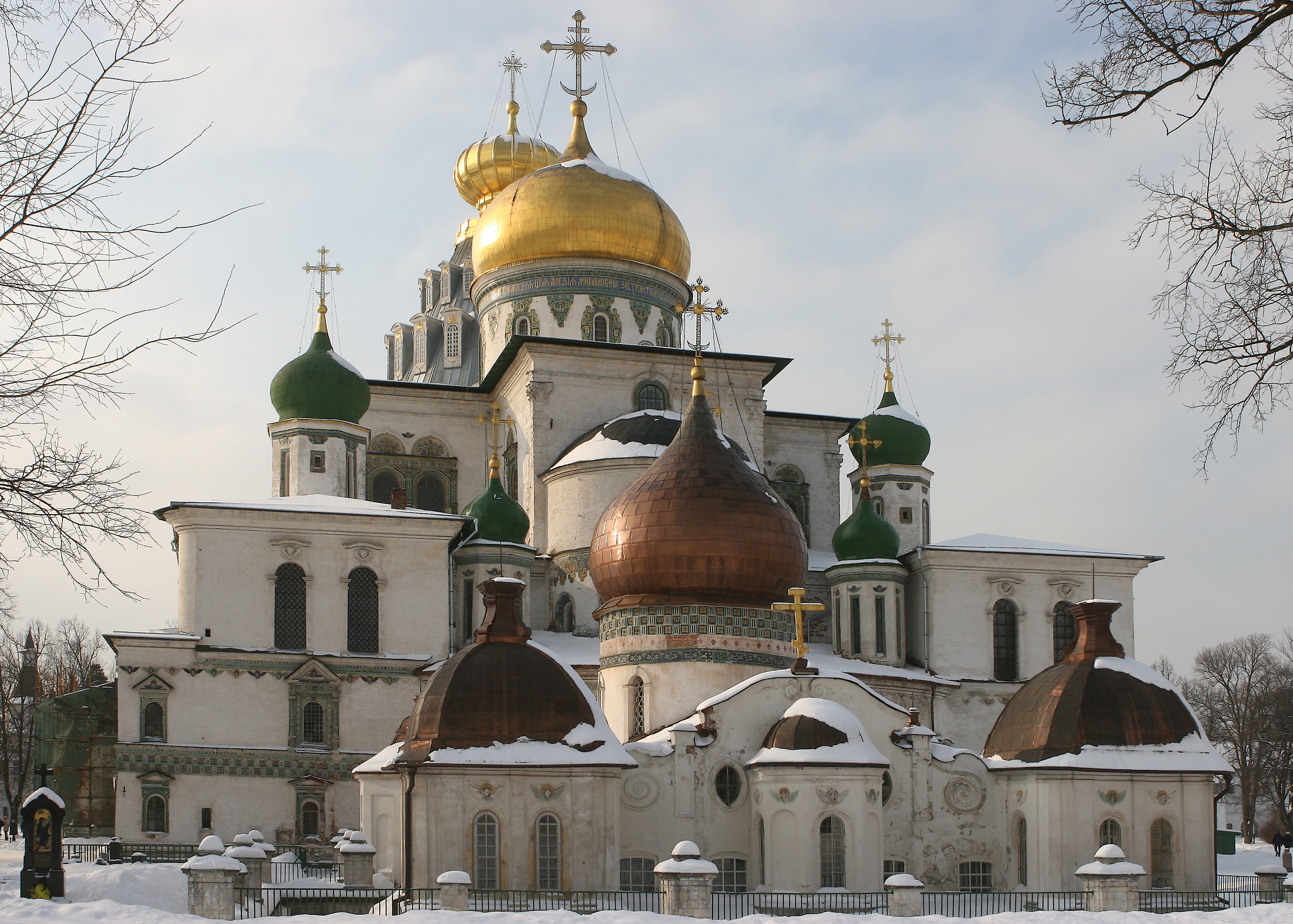
The Monastery
The mini-Jerusalem I spoke about was built in 1656 by the Patriach, Nikon. It was called the New Jerusalem Monsastery and was located in Istra, near Moscow. It was primarily built to promote the universal 'mission of Russian Orthodoxy and Autocracy'. Its centrepiece was a replica of the actual Church of the Holy Sepulchre in Jerusalem, which is now valuable to historians since the original Church was destroyed in the fire 1808.

In 1818, prior to his ascension on the throne, Nicholas I visited the New Jerusalem and was 'deeply moved' by it, such that he ordered its restoration.

During WW2, in 1941, the German army (the 2nd SS division) ransacked the New Jerusalem Monastery. Before their retreat they blew up its unique great belfry; the towers were demolished; the vaults of the cathedral collapsed and buried its famous iconostasis, among other treasures. In 1959, the museum was re-opened to the public, although the bell-tower has never been rebuilt, while the interior of the cathedral is still bare.

Recently, in 2009, the Russian president at the time, Medvedev, issued a presidential order for the restoration and renovation of the monastery (estimated to cost more than 13 billion roubles!)

The Deforestation of Nabih Saleh in Bahrain - in Maps!

 This post is an example of the invaluable information and data provided by the groundbreaking people at mapBH . For those unaware, mapBH is...